During pregnancy the quality of drinking water is especially important. Learn which contaminants such as nitrate and...
EMF radiation can affect the unborn child during pregnancy. This article explains the scientific background and shows...
Montabaur is discussing the installation of public drinking water fountains - a Green Party proposal in response to...
In Montabaur, local politicians are debating public drinking water fountains - prompted by climate change and hot...
Electromagnetic pollution in the bedroom can affect your sleep and your health. This practical guide shows you how to...
During pregnancy a woman's body changes fundamentally. The circulation expands, amniotic fluid is formed and the kidneys work at full capacity. All of this requires an adequate fluid intake - ideally in the form of clean drinking water free of contaminants. And this is precisely where the challenge lies: many mains waters contain residues of pesticides, nitrate or industrial chemicals such as PFAS. These substances can impair the development of the unborn child. Studies, for example by the Federal Environment Agency, show that nitrate levels above 50 mg/l can lead to oxygen deficiency in the foetus. PFAS in turn are considered hormonally active and are suspected of weakening the immune system. Pregnant women should therefore not simply reach for the tap blindly, but pay conscious attention to quality.
Nitrate enters groundwater above all through excessive fertilisation in agriculture. For adults it is harmless in small amounts, because the body breaks it down. In infants and unborn children, however, the enzyme system is not yet fully developed. Nitrate is converted into nitrite in the gut, which blocks oxygen transport in the blood - known as methaemoglobinaemia. The consequence is oxygen deficiency, which in the worst case can lead to malformations or premature birth. PFAS (per- and polyfluoroalkyl substances) are even more insidious: they are extremely persistent, accumulate in the body and are associated with fertility problems, low birth weight and thyroid issues. A Harvard University study from 2023 found PFAS residues in 98% of drinking water samples tested in Europe. EU limits have been tightened, but many households are still above them. For pregnant women this means precaution is better than cure.
There are various water filter technologies for removing nitrate, PFAS and other contaminants from drinking water. Three systems are particularly relevant: reverse osmosis, ionization and conventional filtration (for example activated carbon). Each method has its strengths and weaknesses - especially during pregnancy, where safety is the top priority.
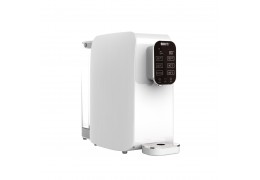
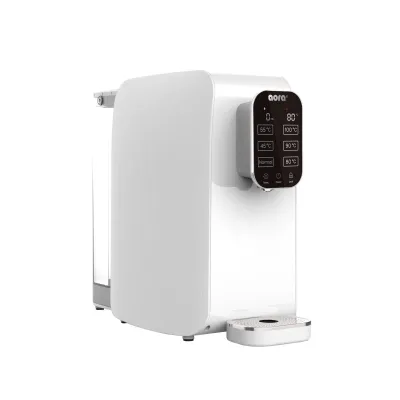
Reverse osmosis systems force water through a semi-permeable membrane that retains even the smallest molecules such as nitrate ions (NO3-) and PFAS compounds. Studies by the Fraunhofer Institute show that osmosis filters can remove up to 99% of all contaminants. This is particularly important because PFAS often occur in very low concentrations yet remain harmful. One drawback: osmosis also removes minerals from the water that are important for the baby's development (for example magnesium). Osmotically filtered water should therefore not be drunk on its own, but mixed with mineral-rich water or passed through special mineralization cartridges. One example of a compact solution is the AORA mobile reverse osmosis system with hot water function, which supplies safe, clean water even when you are out and about.
Ionizing systems change the pH of water through electrolysis and produce alkaline water. Some models have integrated filters that reduce chlorine, heavy metals and organic compounds. However, nitrate and PFAS are not reliably removed by ionization - for that, an upstream osmosis stage or activated carbon is needed. During pregnancy alkaline water can support digestion, but it is no substitute for thorough contaminant removal. Anyone using ionization should make sure the water has been filtered beforehand.
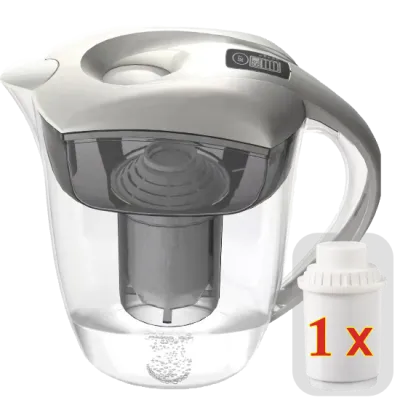
Conventional table-top or under-sink filters with activated carbon improve the taste and remove chlorine, pesticides and some organic compounds. For nitrate and PFAS, however, they are usually unsuitable, because these molecules are too small. Ceramic filters retain bacteria but not chemical contamination. For pregnant women who are unsure whether their water is contaminated, a simple activated carbon filter can be a first step - but not a complete solution. A combination with reverse osmosis makes more sense here.
Before investing in a water filter you should know what is in your water. In Germany waterworks are obliged to publish an annual report. Ask your supplier for the current values for nitrate, PFAS, lead and copper. For pregnant women the pH is also of interest - ideally it lies between 6.5 and 8.5. You can also carry out tests yourself: there are inexpensive test strips for nitrate (around 10 euros) and special laboratory tests for PFAS (around 50 euros). One tip: let the water run for a few seconds in the morning before drinking, as heavy metals can dissolve out of the pipes overnight. If the values are elevated, a water filter - especially a reverse osmosis system - is the safest choice. The premium reverse osmosis system with hot water function, 3-in-1 also has the advantage of providing hot as well as cold water - practical for tea or baby food.
Besides the technology there are simple habits that minimise the risk: do not drink straight from the tap if you live in an older building with lead pipes - let the water run for 2-3 minutes. Avoid plastic bottles, as plasticisers such as bisphenol A (BPA) can pass into the water. Choose glass or stainless steel bottles instead. When you are out and about, use a mobile reverse osmosis system to make sure you always have clean water. Heating water kills bacteria but does not remove PFAS or nitrate - only filtration helps there. Make sure you drink at least 2 litres a day, spread across the day. If you feel nauseous, a sip of alkaline water from an ionizing system can be soothing - but, as noted, only if it has been filtered beforehand.
Pregnancy is not about reacting in a panic but about acting with information. Nitrate and PFAS are real risks, but they can be minimised with the right measures. A water filter - ideally a reverse osmosis system - offers the greatest safety, as it removes almost all contaminants. Ionization and simple filters can complement it, but not replace it. Test your water, choose the right technology and enjoy the certainty that you are giving your baby the best - right from the start. Remember: every sip counts.
Yes, but only if the quality is right. Have your water tested for nitrate and PFAS. If the values are elevated, or if you are unsure, a water filter is advisable.
No, common activated carbon filters do not remove nitrate. For that you need a reverse osmosis system designed specifically for ions.
In principle yes, but it does not remove contaminants such as PFAS or nitrate. Combine ionization with upstream filtration to be on the safe side.
That depends on the model. With reverse osmosis systems the membranes usually last 1-2 years, pre-filters every 6 months. Regular replacement is important, otherwise bacteria can develop.
Drinking water fountains in Montabaur: climate change opens up new sources
Drinking water fountains in Montabaur: climate change as the driver
Halloween in Germany
PFAS and perpetuating chemicals in drinking water: what you need to know
Nitrate in groundwater: who is at risk and how can you protect yourself?