
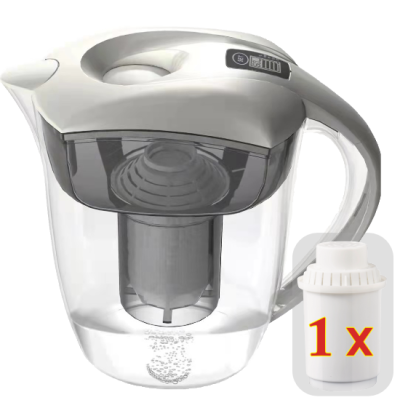



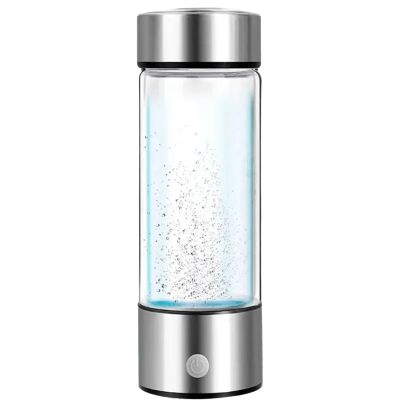









What do the small spheres at the bottom of the device do?
Ceramic spheres are often used in hydrogen water generators or hydrogen water bottles to enrich water with molecular hydrogen (H2). They are made from special ceramic materials designed to generate hydrogen molecules and release them into the water. Here are some properties and functions of ceramic spheres in relation to hydrogen enrichment:
1. Catalytic properties: the ceramic spheres often contain a combination of catalytic materials such as platinum or palladium. These metals act as catalysts, enabling hydrogen gas (H2) to split and the H2 molecule to be transferred into the water.
2. Hydrogen release: through the catalytic reaction with the water, the ceramic spheres allow a controlled release of molecular hydrogen (H2) into the water. The dissolved hydrogen then acts as a powerful antioxidant.
3. Increased surface area: the ceramic spheres often have a porous structure that provides a larger surface. This increases the contact area between the water and the ceramic materials, which improves hydrogen uptake.
4. Sustained hydrogen release: the spheres are designed to release hydrogen continuously over a longer period, so the water stays enriched with hydrogen for longer.
It should be noted, however, that the effectiveness and quality of ceramic spheres for hydrogen enrichment depend on various factors, such as the composition of the ceramic materials, the design of the system and the contact time between water and spheres. The exact mechanisms and properties can vary by manufacturer and product variant.