AURA W23 – Countertop reverse osmosis system with hydrogen generator and hot water function | White / Black

€299.57 - the lowest price from 30 days before the promotion
Regular price: €699.95 (Save €200.19)
Price: €499.76
Gross, plus shipping
€299.57 - the lowest price from 30 days before the promotion
  • 4-in-1 system: reverse osmosis water filter, hydrogen-rich water, chilled water and hot water
  • Hydrogen water with PEM/SPE electrolysis technology – 2-litre H₂ flow-through tank
  • 6 temperature settings: chilled, room temperature, 45 °C, 80 °C, 90 °C, 100 °C
  • Child safety lock for hot water dispensing
  • Instant limescale-free hot water – no need for a kettle
  • 3-stage filtration: carbon filter, sediment-carbon filter & high-performance 200 GPD membrane
  • LED UVC disinfection
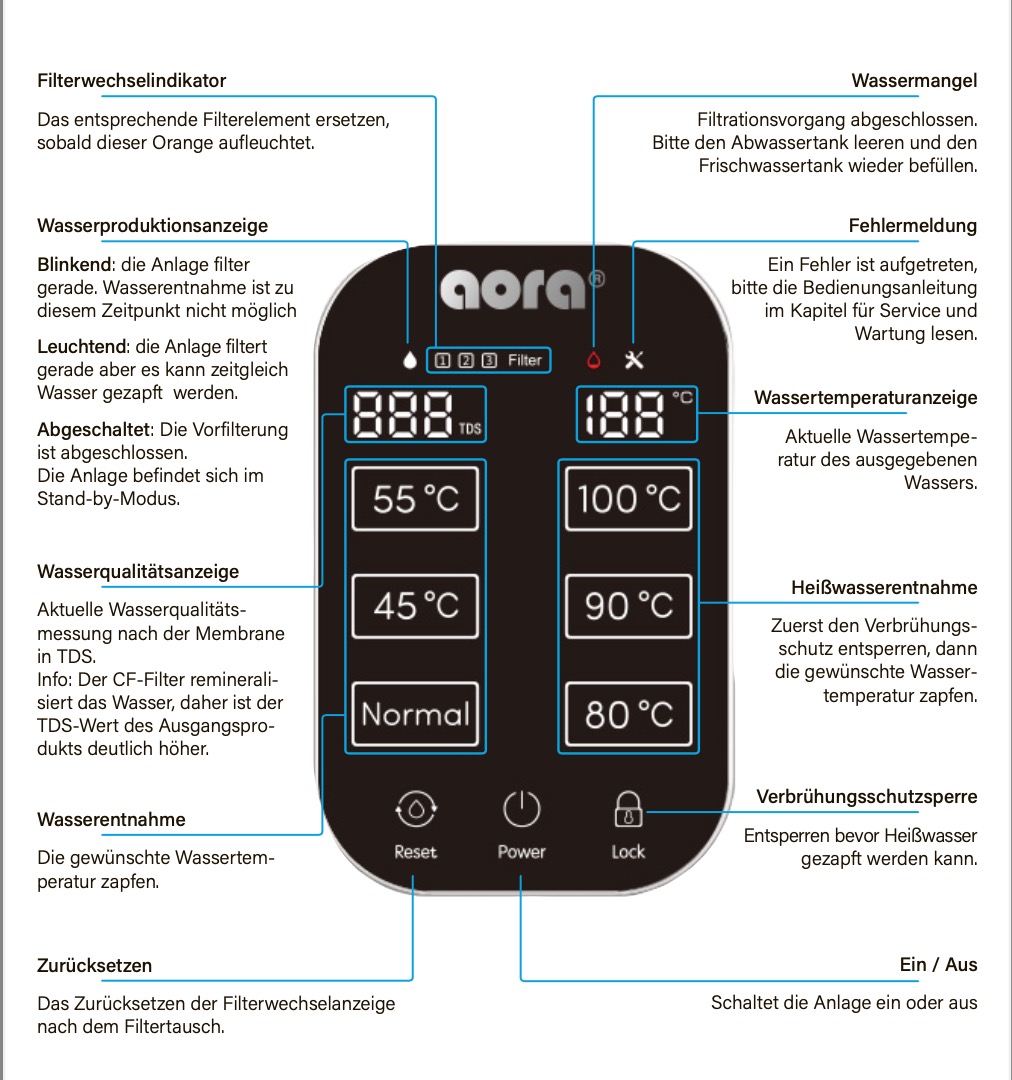
  • Touchscreen display for all functions, including filter change indicator
  • Child’s play to change filters thanks to Quick-Change technology
  • Elegant design in white or black
  • Choice of connection type: without a fixed water connection (flexible, canister operation) or with a fixed water connection (fully automatic, continuous operation)
Finish / Colour
AORA W23 with or without a fixed connection
Product availability: Delivery time approx. 14 days
Delivery time approx. 14 days

By buying with these payment methods you accept our terms. Terms and conditions · Right of withdrawal

AURA W23 – Reverse osmosis with hydrogen generator & hot water

Three-stage filtration · PEM/SPE hydrogen technology · 6 temperature settings · Touchscreen

ⓘChoice of connection type: The AURA W23 is available in two versions – without a fixed water connection (flexible placement, canister operation) or with a fixed water connection (permanently connected, fully automatic supply). Please select your preferred version at the time of purchase.
?

Pure water at the touch of a button

Three filtration stages plus a 200 GPD osmosis membrane remove limescale, heavy metals, chlorine and microparticles – without any complicated setup.

?

Integrated UVC unit

The integrated LED UVC unit continuously sterilises the water and inhibits the growth of microorganisms – ensuring the highest level of purity.

⚛

Hydrogen-rich water with PEM/SPE

The integrated hydrogen generator (2-litre flow-through tank) enriches the water with molecular hydrogen – a field of modern water research that is the subject of intensive study.

?

Six temperatures – one appliance

From ice-cold (10 °C) to boiling hot (100 °C): baby formula, tea, coffee or fresh drinking water – instantly at the desired temperature. No need for a kettle anymore.

?

No more lugging around water crates

Fresh, filtered water straight from the tap – available with or without a fixed water connection, depending on the installation situation.

✨

Minimalist design

Touchscreen display, sleek housing in white or black – the AURA W23 blends discreetly into any modern kitchen.

What the AURA W23 offers you

  • 4-in-1 system: reverse osmosis water filter, hydrogen-rich water, chilled water and hot water
  • Hydrogen-rich water with PEM/SPE electrolysis technology – 2-litre H₂ flow-through tank
  • 6 temperature settings: chilled (10 °C), room temperature, 45 °C, 80 °C, 90 °C, 100 °C
  • Child safety lock for hot water dispensing
  • Instant limescale-free hot water – no need for a kettle
  • 3-stage filtration: carbon filter, sediment-carbon filter & high-performance 200 GPD membrane
  • LED UVC disinfection
  • Touchscreen display for all functions, including filter change indicator
  • Child’s play to change filters thanks to Quick-Change technology
  • Elegant design in white or black

Three-stage filtration with QuickChange technology

Contents of delivery

  • AURA W23 tabletop reverse osmosis system with hydrogen generator (specification as per order)
  • Filter starter set (already fitted)
  • Drip tray
  • German operating instructions

Technical details

Feature Details
Brand AURA
Model W23
Version Benchtop unit
Filtration method Reverse osmosis filtration
Filter (internal) 1× reverse osmosis (RO) membrane
1× Sediment and activated carbon filter (PAC)
1× carbon filter (CF)
Hydrogen generator PEM/SPE hydrogen electrolysis
Sterilisation LED-UVC
Temperature settings 10 °C cold · room temperature · 45 °C · 80 °C · 90 °C · 100 °C
Permanent water connection Optional (with or without)
Suitable water source Tap water
Water filtration capacity 30 litres/hour
Hot water flow rate 18 litres per hour (≥ 90 °C)
Wastewater ratio 2:1 (2 L osmosis water : 1 L waste water)
Display Touchscreen
Rated voltage / frequency 220 V–240 V / 50 Hz
Dimensions (W × H × D) 240 × 430 × 350 mm
Weight 9.6 kg (empty weight)
Warranty 2 years (private customers) · 12 months (business customers)

? Study: Water savings from reverse osmosis effluent in horticulture (PubMed)

⚠ Note on the right of withdrawal: You have the right to withdraw from the purchase of this appliance within 14 days without giving any reason. Please note: If the appliance is used beyond a mere visual inspection (e.g. filling with water, commissioning), you are obliged under Section 357(7) of the German Civil Code (BGB) to compensate us for the resulting loss in value. You should therefore inspect the appliance carefully before using it for the first time.

You can find out more about hydrogen-rich water in our guide.

  • Brand
  • Reference
    919436

AORA W23 Manual

User Manual

Download (729.62KB)

Safety Data Sheet

Safety Data Sheet

Download (271.09KB)

    What is the difference between a water ioniser and a reverse osmosis system?

    A water ioniser is a device that changes the pH value of water and separates it into alkaline and acidic water. It does this by electrolysis: an electric current produces negatively and positively charged ions. The alkaline water is used as drinking water, the acidic water for cleaning. A water ioniser therefore mainly changes the pH value and the taste of the water.

    A reverse osmosis system, by contrast, works on the principle of reverse osmosis. It forces the water through a semi-permeable membrane that holds back impurities such as salts, minerals, heavy metals, bacteria and viruses. The filtered water can be used for drinking, cooking or technical applications. A reverse osmosis system aims to remove as many substances from the water as possible.

    The main difference is therefore the purpose: a water ioniser changes the pH value, a reverse osmosis system purifies the water thoroughly. Which device suits you depends on what matters more to you.

    Osmosis membranes: how do they differ?

    The heart of every reverse osmosis system is the membrane. In household systems you will mainly come across two types:

    • TFC membrane (thin film composite, made of polyamide): fitted in most household systems today. It holds back dissolved substances very extensively but is sensitive to chlorine. That is why an activated carbon pre-filter sits in front of it.
    • CTA membrane (cellulose triacetate): it tolerates chlorine better, but holds back fewer dissolved substances and only works within a narrower pH range. It is rarely found in new household devices.

    Beyond that, membranes differ in three respects:

    • Output: usually stated in GPD (gallons per day), it tells you how much filtered water is produced in a given time. It says nothing about filter quality.
    • Design: replacement membranes only fit the housing and connections of the device they are made for. That is why the AORA GT600, the AORA GT800 and the W23 each have their own replacement membranes. A membrane from another device will usually not fit.
    • Replacement interval: it depends on the local water quality and the amount used. On the W19 and the W23, the RO membrane should be replaced after 12 to 24 months. On the AORA GT800, we recommend replacing the membrane after about 18 months and the PPC pre-filter every 6 months.

    Can an ioniser and reverse osmosis be combined?

    Yes, the two methods are not mutually exclusive. An ioniser can be connected after a reverse osmosis system. There are also reverse osmosis devices with a built-in additional module, for example the W23 with hydrogen generator. If your main aim is to remove substances from tap water, reverse osmosis is what counts. If you care about pH value or taste, the ioniser is what counts.


    Are you satisfied with this article? Usefulness of the article: 9 / 0

    What is reverse osmosis?

    Reverse osmosis is a water treatment process based on the principle of selective permeability. It is a widely used method for desalinating water and removing impurities. Reverse osmosis is used in various applications, including drinking water treatment, seawater desalination, wastewater treatment and process water purification.

    The basic principle of reverse osmosis involves forcing water through a semi-permeable membrane under high pressure. The membrane is designed to retain certain molecules and ions, whilst allowing water molecules to pass through. This effectively removes salts, minerals, organic compounds, heavy metals and other contaminants from the water.

    The reverse osmosis process consists of several components. First, the water to be treated is fed through a pre-filter to remove coarse impurities such as sediment, particles and rust. The water is then pumped into the reverse osmosis unit, where it flows through the semi-permeable membrane.

    The high pressure generated by a pump forces the water to pass through the membrane. The membrane consists of a thin layer of semi-permeable material capable of allowing water molecules to pass through whilst retaining larger dissolved substances. This removes most impurities from the water.

    The purified water that has passed through the membrane is known as permeate and can be used for various purposes, including drinking water, food processing or industrial processes. The water that has not passed through the membrane and contains the contaminants is known as concentrate and is usually disposed of or recirculated back into the reverse osmosis process to optimise water consumption.

    The performance of a reverse osmosis unit is influenced by various factors, including pressure, the type of membrane, the temperature of the water, and the nature and concentration of the contaminants in the feed water. To ensure the efficiency and longevity of the system, it is important to carry out regular maintenance, such as cleaning and replacing the membranes.

    Reverse osmosis offers an effective method of water treatment, particularly in areas with limited access to clean water or where high-purity water is required. It is a proven process for desalinating seawater and removing contaminants from various water sources. Continuous technological development has led to improved membranes and more efficient systems, enabling cost-effective and economical water treatment.


    Are you satisfied with this article? Usefulness of the article: 0 / 0

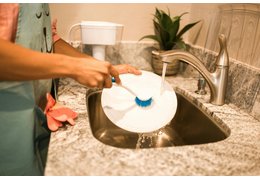
    ‘Water production’ light is flashing – not working after cleaning the water tank. Previously, the appliance had displayed the red indicator (low water level).

    It may be necessary to clean the float during cleaning to prevent any algae from forming in the water tank.

    Please always ensure the float is returned to the correct position when reassembling the unit. In other words, the magnet must face towards the appliance to reactivate the pump signal. This should resolve the issue in most cases.

    Aora Display


    Are you satisfied with this article? Usefulness of the article: 1 / 0

    Can the AORA W23 be easily moved or taken away on trips?

    Yes, theAORA W23 reverse osmosis systemis, in principle, portable and can be moved to a new location. Here are the key points you should bear in mind:

    • Assembly and disassembly: The AORA W23 is atabletop unit, which makes it easier to transport than under-sink units. However, you must dismantle it carefully to avoid damage.

      • Turn off the water supply and disconnect the system from the tap.

      • Empty the water tank completely to prevent leaks.

      • Pack the unit and all components (hoses, filters, tank) securely for transport.

    • Reassembly: When reassembling the system, ensure that all connections are tight and that the system is connected correctly. Check the filters and replace them if necessary.

    • Water quality at the new location: The performance of the reverse osmosis system depends on the quality of the inlet water. If the water quality differs significantly (e.g. whilst on holiday), it may be advisable to check or adjust the filters.


    Are you satisfied with this article? Usefulness of the article: 0 / 0

    What does a reverse osmosis system (AORA W23) filter out, and what can it not filter?

    TheAORA W23is a reverse osmosis system that is particularly effective at removing contaminants from water. Here is an overview:

    What is filtered out?
    • Heavy metals: lead, copper, cadmium, chromium, nickel, etc.

    • Chemical contaminants: chlorine, pesticides, herbicides, fungicides.

    • Micro-organisms: bacteria, viruses (even more effective when combined with a UV filter).

    • Salts and minerals: nitrates, sulphates, fluorides, arsenic.

    • Particles: Sediment, rust, sand, suspended solids.

    • Organic compounds: Medication residues, hormones.

    What is not filtered out?
    • Gases: Dissolved gases such as oxygen or carbon dioxide are not removed.

    • Very small molecules: Some extremely small organic molecules can pass through the membrane.

    • Taste and smell: Chlorine and other substances that affect the taste are removed, but the taste of pure water may be perceived as ‘flat’ due to the absence of minerals.

    Note on minerals:
    • Reverse osmosis also removeshealthy mineralssuch as calcium and magnesium. However, some models (including, where applicable, the AORA W23) have amineralisation filter which reintroduces important minerals into the water after filtration.


    Are you satisfied with this article? Usefulness of the article: 0 / 0

    How is the Valeacell reverse osmosis system (e.g. W12 or W23) installed, and can I do it myself?

    The installation of our reverse osmosis systems (such as the W12 or W23) can be carried out by anyone with some DIY experience, using the connection materials supplied and the illustrated installation instructions. The system is usually connected to the cold water supply under the sink and to a mains power supply. If you are unsure, we recommend having the installation carried out by a qualified plumber. Our customer service team will be happy to assist you with any questions regarding installation by telephone or email.


    Are you satisfied with this article? Usefulness of the article: 0 / 0

Secure payment
Pay via PayPal, credit card, Klarna or bank transfer.
Terms of Delivery
Free delivery on orders of €70.00 or more | Delivery within 1–3 working days
Made-to-order items up to 14 days delivery time
Return Policy
14-day right of withdrawal
  • PayPal
  • Visa
  • Mastercard
  • Überweisung

Shop safely and securely

You might also like

Product video: AURA W23 Osmoseanlage: Wasserstoffgenerator und Temperaturkontrolle

Playing the video establishes a connection to YouTube.

Product Reviews / Q&A

Average rating

5.0
1 Review
★★★★★ Excellent 1
★★★★☆ Good 0
★★★☆☆ Medium 0
★★☆☆☆ Poor 0
★☆☆☆☆ Terrible 0

  • Reviews (1)
  • Questions & Answers (0)
Loading...
Back to top