





AORA W12 – Portable reverse osmosis system with hot water function; no water connection required images


AORA W12 – Portable reverse osmosis system with hot water function; no water connection required
Portable reverse osmosis system with hot water function, without a fixed water connection
WORLD FIRST: AORA – Portable reverse osmosis system with hot water function, requiring no fixed water connection

All the benefits at a glance:
- Instant hot water without limescale; no need for a kettle
- six temperature settings: from room temperature to 100 °C
- Child lock for high-temperature settings
- No more lugging water around and no returnable bottles
- Reduces, amongst other things, nitrate, microplastics and pharmaceutical residues in drinking water
- Temperature and TDS reading display for the filtered water
- Pays for itself quickly and saves money in the long run
- Portable – no need for a fixed water connection or installation
- Hygienic – thanks to materials that are particularly easy to clean
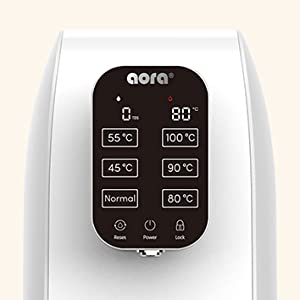
- Large touchscreen

Six temperature settings to choose from
Room temperature
45 °C – perfect for powdered milk (baby food)
55 °C – perfect for honey
80 °C – perfect for tea
90 °C – perfect for coffee
100 °C hot
Large colour touchscreen
with smart filter change reminder
TDS display
Water temperature display
Water tank indicator
Filter status indicator and reset button
On/Off button
Scald protection
Six temperature settings to choose from
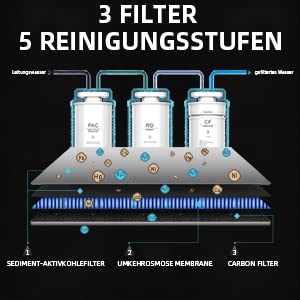
Reverse osmosis filtration with 3 filters in 4 stages
1. SEDIMENT-ACTIVATED CARBON FILTER: 2-in-1, removal of coarse impurities
2. REVERSE OSMOSIS MEMBRANE: Removal of impurities via a semi-permeable membrane with pores measuring 0.0001 μm.
3. CARBON FILTER: 2-in-1, improves the taste, eliminates unpleasant odours and remineralises the filtered water
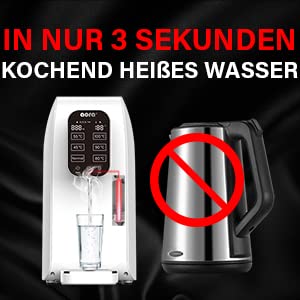
With the AORA W12, you’ll never need a kettle again
Thanks to its innovative heating element, you get boiling water in just 3 seconds.
This makes AORA not only faster but also significantly more energy-efficient than a kettle!
Large 3-litre fresh water tank
plenty of fresh drinking water
3-litre fresh water tank + 2-litre internal purified water tank
Separate 1-litre waste water tank (this prevents repeated filtration, thereby protecting the membrane.)
AORA – The portable reverse osmosis system with no need for a fixed water connection
Enjoy the purest drinking water anytime, anywhere!
No water connection required
Enjoy pure drinking water wherever you are: in the office, bedroom, on a boat, in a motorhome, in a rented flat or holiday home, etc.
Changing the filter is child’s play: convenient QuickChange technology – you don’t need any tools or a specialist!
Once the filter change indicator light comes on:
Open the cover
Remove the old filter
Screw in the new filter
Done!
Technical specifications: AORA W12
| Brand |
AORA |
|---|---|
| Model |
W12 |
| Type |
Benchtop |
| Filtration method |
reverse osmosis |
| Filter (internal) |
1x reverse osmosis (RO) membrane |
| Filter replacement cycle: | PAC sediment-carbon filter every 6–12 months | As soon as the indicator on the display flashes, but no later than after 12 months. CF carbon filter every 6–12 months | As soon as the indicator on the display flashes, but no later than after 12 months. Membrane every 12–24 months | As soon as the indicator on the display flashes, but no later than after 24 months. |
| Types of water produced |
Filtered still water |
| Temperature of the dispensed water |
1. Filtered, at room temperature |
| Suitable water source |
Tap water |
| Operating water pressure |
0.4–0.8 MPa |
| Ambient temperature |
4 °C to 38 °C |
| Water filtration rate |
7.8 litres per hour |
| Hot water flow rate |
18 litres per hour (≥ 90 °C) |
| Wastewater ratio |
2:1 (2 litres of osmosis water to 1 litre of waste water) |
| Display |
Colour touchscreen |
| Power connection |
Yes |
| Rated voltage / frequency |
20V~–240V~/50Hz |
| Dimensions W x H x D |
200 x 387 x 450 mm |
| Weight |
7.4 kg (unladen) |
| Warranty |
2 years |
Contents of delivery:
- Select model
Important note:
This is a hygiene product. Returns are not permitted if the device has been filled with water and has been used.
Extract from the right of withdrawal:
The right of withdrawal expires prematurely in the case of contracts
- for the supply of sealed goods which, for reasons of health protection or hygiene, are not suitable for return if their seal has been broken after delivery;
- for the supply of goods where, due to their nature, they have become inseparably mixed with other goods after delivery;
| Brand |
AORA |
|---|---|
| Model |
W12 |
| Type |
Benchtop |
| Filtration method |
reverse osmosis |
| Filter (internal) |
1x reverse osmosis (RO) membrane |
| Filter replacement cycle: |
PAC sediment-carbon filter every 6–12 months | As soon as the indicator on the display flashes, but no later than after 12 months. |
| Types of water produced |
Filtered still water |
| Temperature of the dispensed water |
1. Filtered, at room temperature |
| Suitable water source |
Tap water |
| Operating water pressure |
0.4–0.8 MPa |
| Ambient temperature |
4 °C to 38 °C |
| Water filtration rate |
7.8 litres per hour |
| Hot water flow rate |
18 litres per hour (≥ 90 °C) |
| Wastewater ratio |
2:1 (2 litres of osmosis water to 1 litre of waste water) |
| Display |
Colour touchscreen |
| Power connection |
Yes |
| Rated voltage / frequency |
20V~–240V~/50Hz |
| Dimensions W x H x D |
200 x 387 x 450 mm |
| Weight |
7.4 kg (unladen) |
| Warranty |
2 years for private customers (12 months for business customers) |
-
Brand

-
Reference9008
-
In stock10 Items
-
MPN9008
-
Heavy metals: lead, copper, cadmium, chromium, nickel, etc.
-
Chemical contaminants: chlorine, pesticides, herbicides, fungicides.
-
Micro-organisms: bacteria, viruses (even more effective when combined with a UV filter).
-
Salts and minerals: nitrates, sulphates, fluorides, arsenic.
-
Particles: Sediment, rust, sand, suspended solids.
-
Organic compounds: Medication residues, hormones.
-
Gases: Dissolved gases such as oxygen or carbon dioxide are not removed.
-
Very small molecules: Some extremely small organic molecules can pass through the membrane.
-
Taste and smell: Chlorine and other substances that affect the taste are removed, but the taste of pure water may be perceived as ‘flat’ due to the absence of minerals.
-
Reverse osmosis also removeshealthy mineralssuch as calcium and magnesium. However, some models (including, where applicable, the AORA W23) have amineralisation filter which reintroduces important minerals into the water after filtration.
A water ioniser is a device used to alter the pH level of water and to separate it into alkaline and acidic water. It uses electrolysis technology to ionise the water and produce negatively and positively charged ions. Alkaline water is often used as drinking water and is said to have an alkalising effect on the body, whilst acidic water can be used for cleaning purposes. Water ionisers aim to alkalise the water and alter its taste.
On the other hand, a reverse osmosis system is a system based on the principle of reverse osmosis, as described previously. It uses a semi-permeable membrane to remove impurities such as salts, minerals, heavy metals, bacteria and viruses from the water. The process of reverse osmosis produces clean, filtered water that can be used for various purposes such as drinking, cooking or industrial applications. Reverse osmosis systems aim to rid the water of a wide range of contaminants and ensure high water quality.
The main difference between a water ioniser and a reverse osmosis system lies in how they work and what they are designed to achieve. Whilst a water ioniser is primarily designed to alter the pH level of the water and provide potentially alkaline water, a reverse osmosis system focuses on removing contaminants and providing clean, filtered water. The choice between the two depends on individual requirements and preferences – whether one prefers water ionisation or comprehensive purification.
Reverse osmosis is a water treatment process based on the principle of selective permeability. It is a widely used method for desalinating water and removing impurities. Reverse osmosis is used in various applications, including drinking water treatment, seawater desalination, wastewater treatment and process water purification.
The basic principle of reverse osmosis involves forcing water through a semi-permeable membrane under high pressure. The membrane is designed to retain certain molecules and ions, whilst allowing water molecules to pass through. This effectively removes salts, minerals, organic compounds, heavy metals and other contaminants from the water.
The reverse osmosis process consists of several components. First, the water to be treated is fed through a pre-filter to remove coarse impurities such as sediment, particles and rust. The water is then pumped into the reverse osmosis unit, where it flows through the semi-permeable membrane.
The high pressure generated by a pump forces the water to pass through the membrane. The membrane consists of a thin layer of semi-permeable material capable of allowing water molecules to pass through whilst retaining larger dissolved substances. This removes most impurities from the water.
The purified water that has passed through the membrane is known as permeate and can be used for various purposes, including drinking water, food processing or industrial processes. The water that has not passed through the membrane and contains the contaminants is known as concentrate and is usually disposed of or recirculated back into the reverse osmosis process to optimise water consumption.
The performance of a reverse osmosis unit is influenced by various factors, including pressure, the type of membrane, the temperature of the water, and the nature and concentration of the contaminants in the feed water. To ensure the efficiency and longevity of the system, it is important to carry out regular maintenance, such as cleaning and replacing the membranes.
Reverse osmosis offers an effective method of water treatment, particularly in areas with limited access to clean water or where high-purity water is required. It is a proven process for desalinating seawater and removing contaminants from various water sources. Continuous technological development has led to improved membranes and more efficient systems, enabling cost-effective and economical water treatment.
TheAORA W23is a reverse osmosis system that is particularly effective at removing contaminants from water. Here is an overview:
What is filtered out?
What is not filtered out?
Note on minerals:
The installation of our reverse osmosis systems (such as the W12 or W23) can be carried out by anyone with some DIY experience, using the connection materials supplied and the illustrated installation instructions. The system is usually connected to the cold water supply under the sink and to a mains power supply. If you are unsure, we recommend having the installation carried out by a qualified plumber. Our customer service team will be happy to assist you with any questions regarding installation by telephone or email.
 Secure payment
Pay via PayPal, credit card, Klarna or bank transfer.
 Terms of Delivery
Free delivery on orders of €70.00 or more | Delivery within 1–3 working days
 Return Policy
14-day right of withdrawal


Shop safely and securely
Related articles
 PFAS and perpetuating chemicals in drinking water: what you need to know
 Reverse Osmosis vs. Tap Water: The Big Comparison
 Bacteria in the drinking water in Stauchitz: boil water notice issued
 Drinking Water Warning in Neißeaue: Chlorination Ordered
 Nitrate in groundwater: who is at risk and how can you protect yourself?
 Braunschweig: Bacteria in the Drinking Water – What You Need to Know Now
 Drinking Water Shortage in Jülich: Heat and Pool Filling Strain Supply
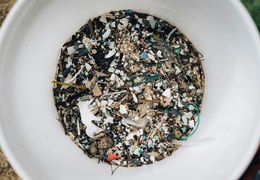 Microplastics in Drinking Water: Extent, Risks and Solutions